Steady State Health | 5 Min Read

Let’s be honest: perimenopause and menopause can feel like your body updated its software overnight…but didn’t send you the release notes. Suddenly your favorite jeans are judging you, your waistline feels betrayed, and no matter how “clean” you eat, the belly fluff refuses to budge.
Here’s the truth:
It’s not you. It’s your hormones.
And the shift toward belly fat is extremely common — even in women who do everything “right.”
But here’s the even better truth:
You’re not powerless.
We now understand why this happens, and we’ve got tools to fix it.
The Real Talk on Visceral Fat
Not all fat is created equal.
- Subcutaneous fat = the pinchable stuff on your hips or thighs. Mostly harmless.
- Visceral fat = the hidden kind that wraps around your organs like cling wrap. The troublemaker. The drama queen.
Visceral fat is metabolically active, which means it loves stirring chaos:
- Releases inflammatory chemicals
- Messes with your insulin
- Stresses your liver
- Raises the risk of heart disease, diabetes, and even dementia
It’s not just about how your jeans fit. It’s about long-term health.
So why does it show up during menopause?

Before menopause, estrogen helps direct fat storage to the hips and thighs — the classic “pear shape.” But as estrogen drops, your body switches to apple mode, storing fat deep in the belly instead.
Research shows:
- Postmenopausal women can see up to a 42% increase in central fat storage — even without gaining weight overall.
- Metabolism slows down.
- Muscle mass drops.
- Insulin resistance rises.
You’re not imagining it. Your biology changed.

But here’s the empowering part:
Visceral fat isn’t a life sentence — and you can absolutely shrink it.
5 Veggies That Kick Belly Fat Where It Hurts
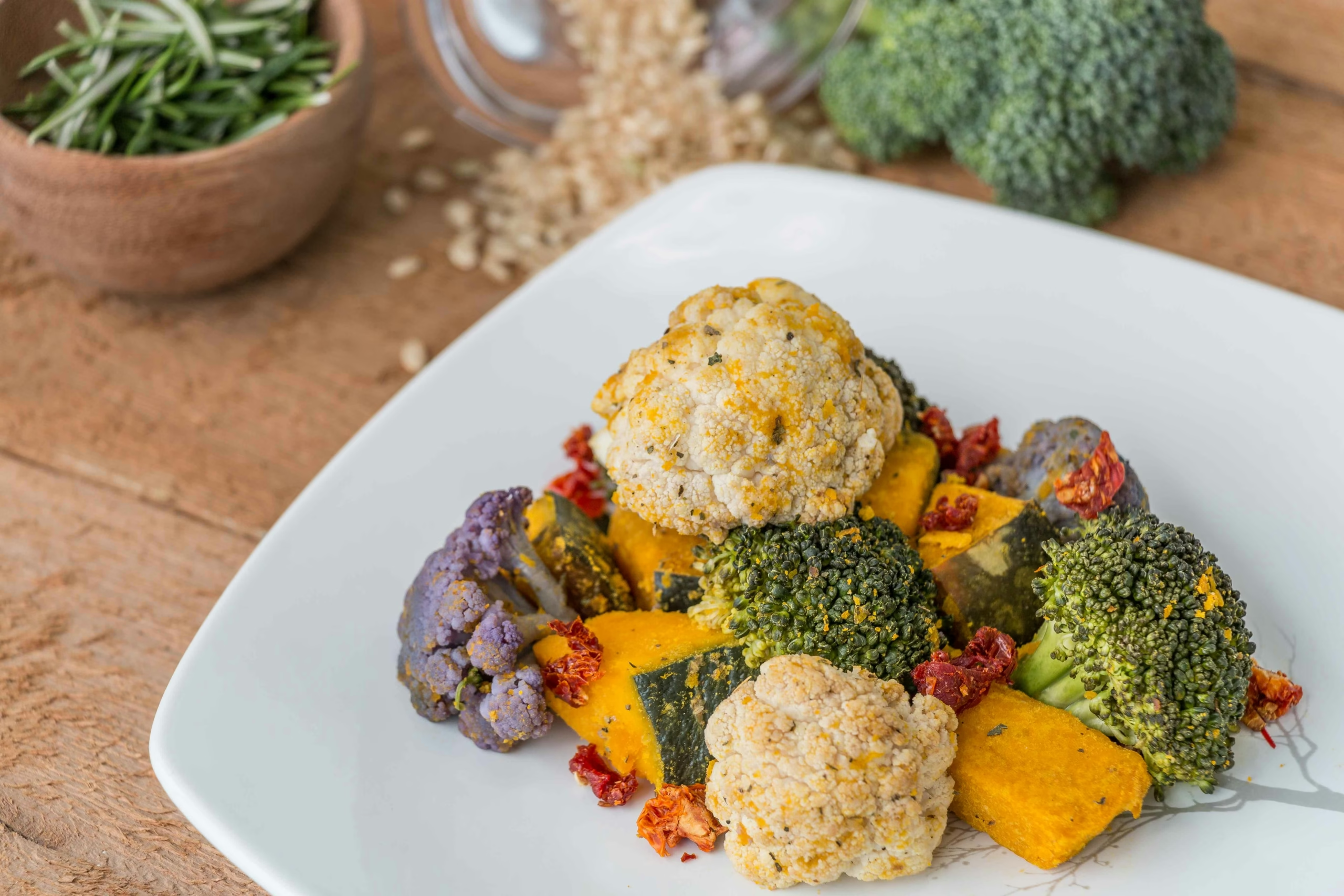
These vegetables aren’t just “healthy” — they contain compounds shown to help reduce inflammation, support metabolism, and encourage fat loss.
???? Spinach
Packed with carotenoids — antioxidants that calm inflammation and help reduce fat storage. Plus, it’s low calorie and full of fiber, making it a superstar for satiety.
???? Cauliflower (and Broccoli)
Cruciferous veggies contain glucosinolates that turn into sulforaphane, a compound that fights inflammation and improves insulin sensitivity. Translation: better blood sugar, better metabolism.
???? Brussels Sprouts
Tiny but mighty. These babies offer both sulforaphane and carotenoids — a one-two punch against belly fat. They also deliver fiber to keep you satisfied longer.
???? Artichokes
One medium artichoke = 7 grams of fiber. Your gut bacteria thrive on fiber, and a healthy microbiome supports weight, metabolism, and inflammation control.
???? Red Cabbage
Its gorgeous purple color comes from anthocyanins — antioxidants linked to fat-burning and better gut diversity. Ferment it into kimchi for a probiotic boost that your belly will love.

???? Beyond the Veggies: Whole-Life Strategies for Shrinking Visceral Fat
Vegetables lay the foundation, but shrinking visceral fat takes a holistic strategy.
Here’s what works:
- Eat more fruits → fiber + water = fullness without overload
- Move your body → strength training + HIIT burn belly fat faster than slow cardio
- Manage stress → high cortisol tells your body to hoard belly fat
- Sleep 7–8 hours → poor sleep wreaks havoc on hunger hormones
- Rethink alcohol → it lowers inhibitions and raises inflammation
Every little shift helps.
???? GLP-1 Medications: Your Menopause Metabolism Power Tool

If you feel like your hunger and cravings have been hijacked, GLP-1 medications can be a game-changer.
They help by:
- Reducing appetite and cravings
- Helping you feel full sooner
- Improving insulin resistance
- Lowering inflammation
- Reducing total and visceral fat
They’re not a magic wand—but paired with nutrition, hydration, and strength training, they work with your biology instead of against it.
???? Your Menopause Metabolic Blueprint
1. Eat High Fiber (30–40 grams/day)
Fiber smooths blood sugar, boosts fullness, and supports your gut microbiome.
2. Increase Protein (0.8–1g per lb of goal body weight)
Protein maintains muscle—the key to a healthy metabolism.
3. Hydrate Like It’s Your Job
Especially important if you’re on a GLP-1. Aim for 70–100 oz daily.
4. Lift Weights
Think of strength training as your metabolism’s best friend. Even 2–3 times per week makes a huge difference.
5. Strategic Supplements
Support gut health, hormone balance, inflammation, and metabolism.
???? Explore our curated Thorne supplement shop for science-backed options.

Visceral fat is not your fault—and it’s not forever.
It’s your body sending a message: “I need support.”
Every spinach salad…
Every strength workout…
Every boundary you set with stress…
Every night you choose sleep…
That’s you rewriting your health story.
✨ Your symptoms aren’t in your head — and you don’t have to figure this out alone.
Book a consultation today and let’s uncover the root cause—together. ✨
GET IN TOUCH
Reference (APA 7th Edition)
Abildgaard, J., Ploug, T., Al-Saoudi, E., Wagner, T., Thomsen, C., Ewertsen, C., Bzorek, M., Pedersen, B. K., & Pedersen, A. T. (2021). Changes in abdominal subcutaneous adipose tissue phenotype following menopause is associated with increased visceral fat mass. Scientific Reports, 11, 14750.
Porada, D., Gołacki, J., & Matyjaszek-Matuszek, B. (2023). Obesity in perimenopause — current treatment options based on pathogenetic factors. Endokrynologia Polska, 74(6), 565–575.
Younkin, L. (2025, August 31). 5 vegetables you should be eating to reduce visceral fat, according to dietitians. EatingWell.
https://www.eatingwell.com/article/5-vegetables-you-should-be-eating-to-reduce-visceral-fat